Beyond the Frame: Decoding Sora's Safety Protocols and the Future of Synthetic Reality
Key Takeaways
- Sora's safety architecture marks a pivotal, yet incomplete, attempt to preemptively govern synthetic media at scale
- The long-term integrity of digital information now hinges on a complex interplay of platform responsibility, user literacy, and evolving regulatory frameworks
- Creators adopting advanced AI tools bear a heightened ethical burden, redefining the boundaries of authenticity and accountability in a new digital epoch.
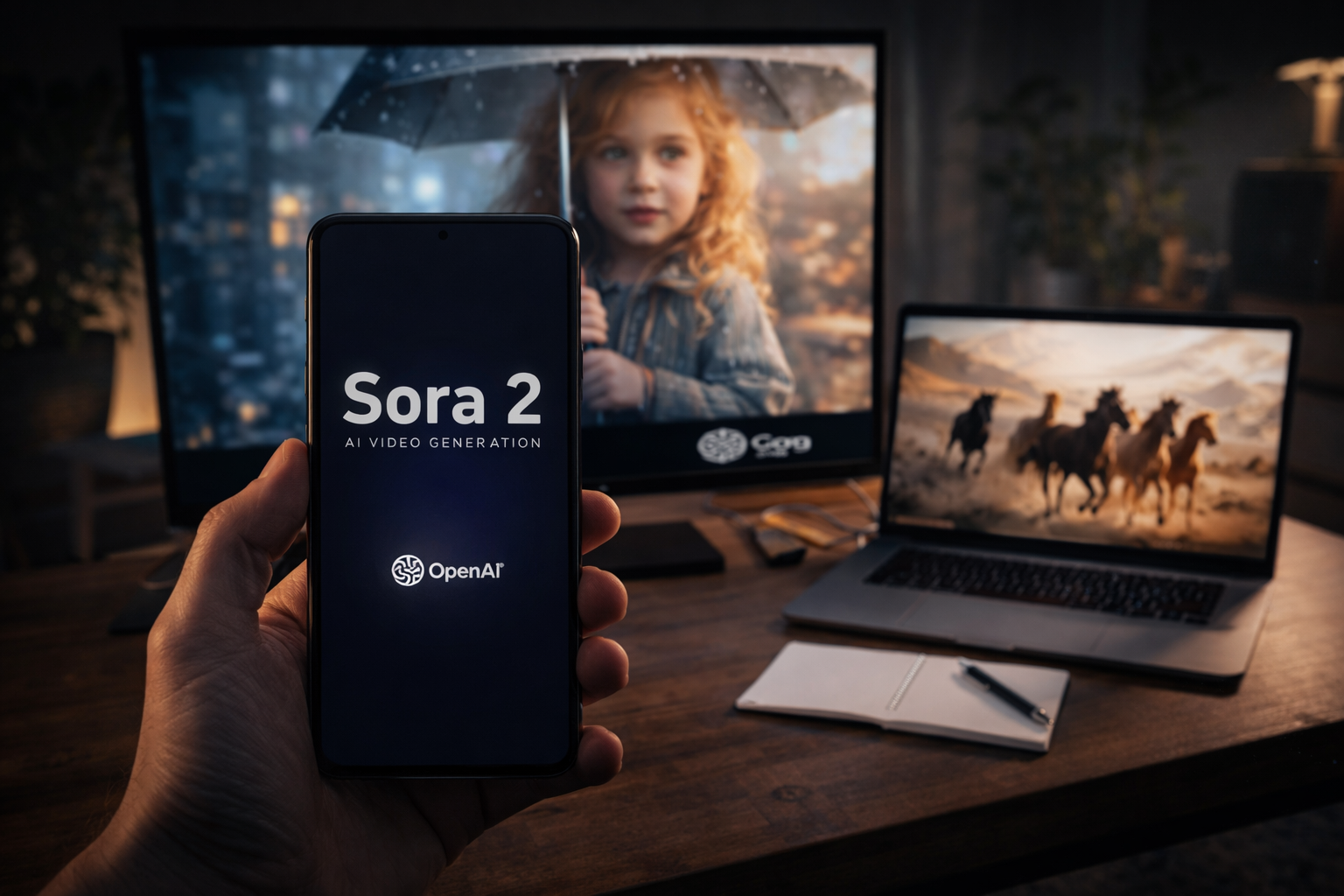
What is reality when the pixels can be perfectly sculpted by an algorithm, indistinguishable from the tactile world? This is not a philosophical musing from a dystopian novel; it is the immediate, palpable question presented by OpenAI’s announcement regarding “Creating with Sora Safely.” As the curtain rises on Sora 2 and its dedicated application, promising a new frontier in video generation anchored in “concrete protections,” we at The NexusByte must look beyond the immediate headlines to decipher the long-term ramifications for digital integrity, societal trust, and the very definition of creative truth.
The Algorithmic Canvas: A New Genesis of Image and Illusion
Sora is not merely another tool; it represents a seismic shift in our relationship with digital media. Its capacity to generate hyper-realistic, complex video sequences from simple text prompts ushers in an era where the boundary between the observed and the imagined blurs with unprecedented fidelity. Imagine entire short films, detailed product demonstrations, or even historical recreations conjured into existence with linguistic commands. The potential for democratizing high-quality video production is intoxicating, offering unprecedented creative leverage to artists, marketers, and storytellers who previously faced prohibitive barriers of time, cost, and technical expertise.
Unveiling Sora’s Dual Nature: Power and Peril
Yet, with such immense creative power comes an equally profound shadow. The ease with which Sora can fabricate scenes also presents a direct challenge to the veracity of digital information. The spectre of misinformation, deepfakes, and synthetic narratives designed to manipulate or deceive looms large. OpenAI’s proactive stance — building Sora 2 and its app “with safety at the foundation” — acknowledges this inherent dualism. It’s a tacit admission that the genie, once out of the bottle, requires an intricate web of safeguards to prevent chaos. But how comprehensive can these “concrete protections” truly be against the boundless ingenuity of human intent, both benign and malicious? This is the critical juncture for the industry.
Engineering Trust: OpenAI’s Foundational Bet
OpenAI’s strategy hinges on a multi-pronged approach: technical safeguards embedded within Sora 2, and user-centric protections within the Sora app. This implies content moderation, watermarking, and possibly restrictions on certain types of prompts. The intention is clear: to prevent the generation of harmful, illegal, or unethical content from the outset.
Beyond the Code: The Unseen Layers of Protection
While the specifics remain under wraps, we can infer the implementation of sophisticated content filtering mechanisms, perhaps drawing upon OpenAI’s extensive experience with DALL-E and ChatGPT. These systems likely incorporate neural networks trained to detect and block prompts that request violent, explicit, or discriminatory content. Furthermore, the concept of a “new social creation platform” suggests a moderated environment, potentially involving human review, user reporting mechanisms, and clear guidelines for content usage. The integrity of any generated media, however, becomes a shared responsibility. Transparent watermarking, though often circumvented, could provide a crucial signal of synthetic origin, fostering a culture of informed consumption.
The Regulatory Void and the Platform’s Burden
However, relying solely on platform-level interventions presents its own set of challenges. The speed of technological advancement often outpaces the legislative process, leaving a significant regulatory void. Can any company unilaterally define the ethical boundaries for a technology with global reach and profound societal impact? The burden on OpenAI, and future developers of similar tools, is immense. It moves beyond mere technological innovation to encompass a role akin to digital custodians, tasked with policing the very fabric of generated reality. This pioneering move sets a precedent, placing significant weight on the effectiveness and transparency of these initial “concrete protections.” The true test will be their resilience against determined misuse and their adaptability to evolving threats.
The Creator’s Imperative: Navigating the Ethical Frontier
For creators, Sora opens up a universe of possibilities, yet it simultaneously imposes an elevated ethical imperative. The ease of creation must not obscure the responsibility for the created. Artists, filmmakers, and content producers leveraging such powerful tools must become arbiters of truth and intent, understanding that their outputs, however imaginative, can have real-world consequences.
Redefining Authenticity in a Synthetic Age
The distinction between “real” and “synthetic” content will increasingly hinge on transparency. Creators have a moral obligation to disclose the AI-assisted nature of their work, especially when presenting it as fact or documentation. This isn’t just about avoiding deception; it’s about preserving the integrity of creative expression and fostering an informed audience. The future of artistic authenticity in a synthetic age will be defined not by the absence of AI, but by the honest and responsible application of it.
The Long Game: Shaping the Digital Ethos
OpenAI’s proactive approach to safety with Sora is not merely a technical undertaking; it’s an attempt to lay down foundational principles for the nascent era of hyper-realistic generative AI. The success or failure of these “concrete protections” will profoundly shape how society adapts to and trusts artificial intelligence. It’s a crucible moment that demands continuous iteration, robust public dialogue, and a collaborative effort involving policymakers, ethicists, developers, and the public.
Ultimately, “Creating with Sora Safely” is not just a company mantra; it’s a societal challenge. The future of digital content integrity, the nuanced balance between innovation and responsibility, and our collective ability to discern truth from sophisticated illusion hinges on these early, critical steps. We are not just building tools; we are co-authoring the very essence of future digital reality. The journey has just begun, and the stakes could not be higher.