Key Takeaways
- Specialized hardware finds its stable equilibrium, affirming market demand for bespoke experiences
- The Riffmaster's journey validates investment in high-fidelity, purpose-built gaming peripherals
- This trend signals a broader resurgence of tactile, immersive tech over purely digital abstraction.
The Riffmaster’s Encore: A Price Drop That Resonates Beyond the Deal
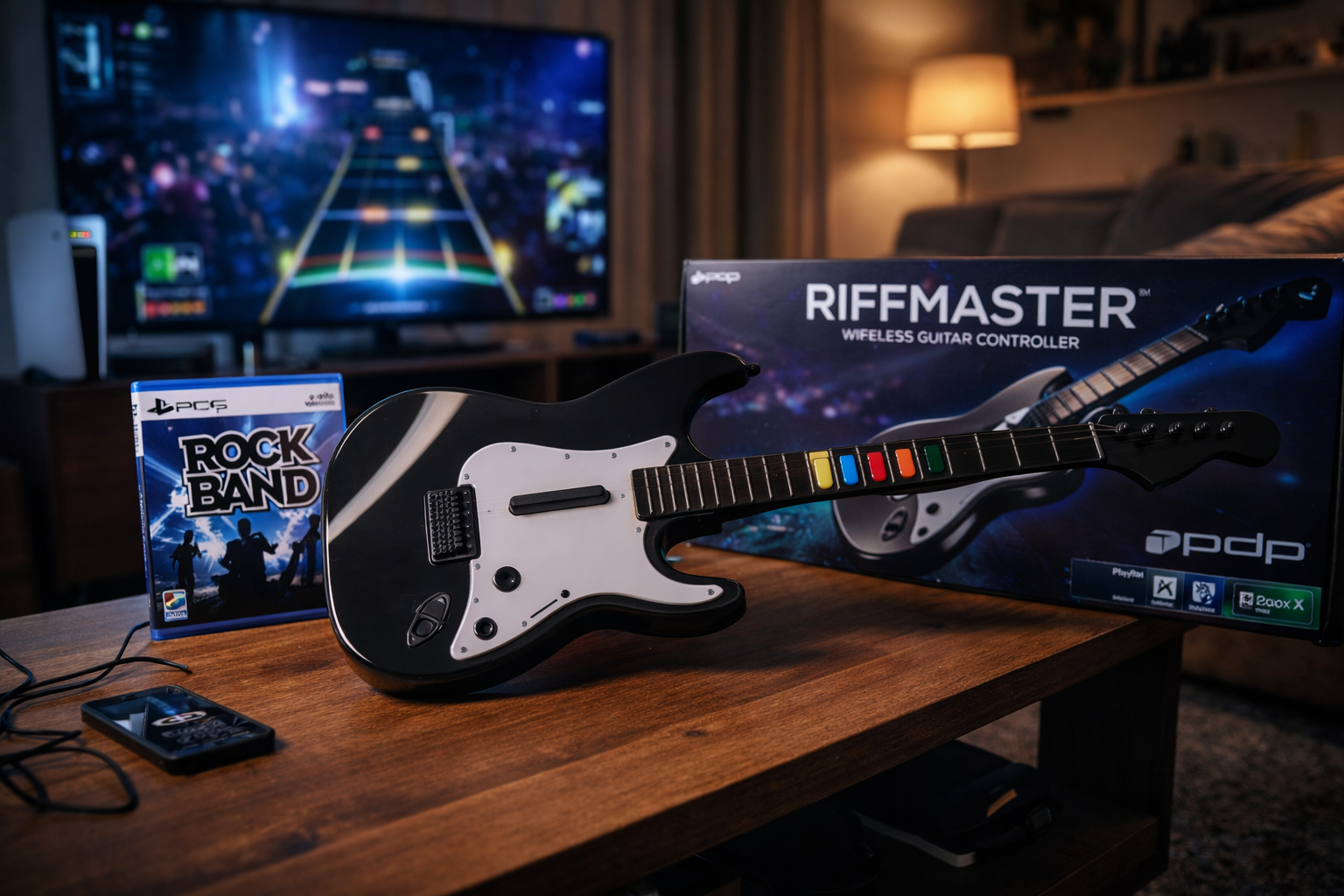
In the ever-accelerating current of technology news, a simple price adjustment on a gaming peripheral might seem like a mere ripple. Yet, when PDP’s Riffmaster wireless guitar controller – a beacon of specialized hardware in a largely generalized market – returns to its best price point, it’s not just a commercial event. For the discerning eye, it’s a significant pulse check on the health of niche tech, the enduring power of experiential design, and a subtle forecast for the future of interactive hardware. At The NexusByte, we look beyond the immediate transaction to uncover the deeper currents.
The Echoes of a “Dark Time”: A Market Analysis
The early 2020s, as succinctly put by industry observers, represented a “dark time” for fans of rhythm games like Rock Band, particularly for those who had migrated to the burgeoning PlayStation 5 and Xbox Series X ecosystems. This wasn’t merely a scarcity of new titles; it was a profound vacuum in hardware innovation. While console generations advanced in graphical prowess and processing power, the specific, tactile instruments that defined a genre were left behind. Developers and manufacturers seemed to have shifted focus, prioritizing mass-market, general-purpose controllers over the bespoke interfaces that foster deep, immersive engagement.
This period of neglect wasn’t an oversight; it was a market calculation. The perceived risk in catering to a passionate but niche audience, coupled with the complexities of manufacturing and distribution for specialized hardware, likely pushed rhythm game peripherals to the periphery. The industry gambled on generalized digital experiences, perhaps underestimating the human craving for physical interaction, for the satisfying thwack of a fret button, the tangible strum of a plastic string, the visceral connection between a physical action and an on-screen crescendo.
The Riffmaster’s Resurgence: A Hardware Philosophy Reaffirmed
The eventual launch of the Riffmaster in early 2024 was a testament to the undeniable truth that quality, specialized hardware finds its audience. It wasn’t merely a functional replacement; it was an evolution. Designed for modern consoles, it promised an improved, more feature-packed experience. Its initial launch at $129.99, swiftly rising to $149.99, reflected both the pent-up demand and the cost associated with bringing such a product to market. Now, its return to that initial, more accessible price point isn’t just a seasonal discount; it suggests a stabilization, a confident understanding of its market value, and perhaps, a strategic move to broaden its adoption.
What does this stabilization signify? It means that the investment in developing, manufacturing, and distributing a highly specialized controller for a specific genre has been validated. It means that the “niche” is robust enough to sustain dedicated hardware. In an age where digital convergence often leads to homogenization, the Riffmaster stands as a bold counter-narrative, proving that unique, purpose-built gadgets are not just desirable but essential for certain forms of immersive entertainment.
Beyond the Bargain: Long-Term Implications for Experiential Tech
The significance of the Riffmaster’s price equilibrium extends far beyond the immediate thrill of a good deal. It illuminates several critical long-term trends in the technology landscape:
- The Enduring Power of Tactile Experience: As our digital lives become increasingly abstract – mediated by touchscreens, voice commands, and invisible AI – there is a burgeoning desire for tangible, physical interfaces that provide rich haptic feedback and direct control. The Riffmaster isn’t just input; it’s an extension of the player, bridging the gap between physical action and digital outcome in a way that generic controllers cannot. This validates the continued innovation in haptic technology, bespoke input devices, and augmented reality peripherals that enhance physical engagement.
- Validation of Niche Markets: The success of products like the Riffmaster sends a clear message to hardware manufacturers and investors: specialized markets, while smaller, are fiercely loyal and willing to invest in high-quality, purpose-built solutions. This could catalyze a renaissance in other niche peripherals – from advanced flight sticks for simulation enthusiasts to bespoke VR haptic suits, or even sophisticated culinary tech gadgets. The era of one-size-fits-all hardware may be giving way to a more diverse, segmented market focused on specific, high-fidelity experiences.
- The Evolution of “Premium” in Hardware: What defines a premium gadget in the future? It might not solely be about raw processing power or ubiquitous connectivity. Instead, it could increasingly hinge on the quality of the experience it enables, the precision of its haptics, the elegance of its ergonomic design, and its ability to seamlessly integrate into a specific, passionate activity. The Riffmaster’s initial premium pricing, and its current strategic re-pricing, is a masterclass in establishing and maintaining value based on experiential superiority.
- Supply Chain Maturity and Sustainability: The fact that such a specialized item can reach a stable, competitive price point also speaks volumes about the evolving maturity of global supply chains and manufacturing processes for intricate hardware. It suggests that the challenges faced in the early 2020s are being overcome, paving the way for more consistent availability and affordability of innovative, specialized tech.
Conclusion: A Chord Struck for the Future
The return of PDP’s Riffmaster to its best price is more than a fleeting sales event. It’s a powerful reaffirmation of a fundamental truth in technology: true innovation isn’t always about the broadest appeal, but often about the deepest connection. It underscores that even in a world racing towards AI-driven abstraction and generalized computing, there remains an unyielding human demand for physical, tactile, and exquisitely engineered tools that amplify our specific passions.
For ‘The NexusByte’, this is a positive omen. It signals a future where technological progress is measured not just in computational leaps, but in the richness of the experiences it enables, the diversity of the niches it serves, and the precision with which it satisfies our most specific, human desires. The Riffmaster isn’t just a guitar controller; it’s a resonant chord struck for a more diverse, more engaging, and ultimately, more human future for hardware.