The Spatial Revolution at Your Doorstep: Why UWB Smart Locks Redefine Home Access
Key Takeaways
- UWB integration elevates smart locks from mere convenience to foundational nodes for spatial computing and enhanced security.
- The current accessibility of UWB-enabled devices signals a crucial inflection point for mainstream adoption of context-aware smart homes.
- While currently ecosystem-specific, UWB's long-term promise is an open, interoperable standard that will reshape our interaction with physical spaces.
The Unlocking of Tomorrow: Why UWB Smart Locks Are More Than Just a Discounted Gadget
The discourse around “smart homes” has long been plagued by a fundamental irony: many so-called intelligent devices merely digitize existing inconveniences. We’ve replaced physical keys with passcodes, light switches with voice commands, and manual thermostat adjustments with app sliders. While incrementally useful, this often feels more like a digital veneer than a truly intelligent transformation of our physical spaces.
But then, a subtle tremor signals a tectonic shift. News of a specific smart lock, the Aqara U400 with its integrated Apple U1 ultra-wideband (UWB) chip, becoming more accessible via Amazon’s Big Spring Sale, might seem like just another consumer electronics deal. Yet, for those attuned to the undercurrents of technological evolution, this moment represents something far more profound. It’s not just about a cheaper gadget; it’s about the democratization of a technology poised to redefine our most intimate physical boundary: the front door.
Beyond Bluetooth: The Precision of Spatial Awareness
For years, Bluetooth and Wi-Fi have been the workhorses of smart home connectivity. They’ve served adequately for remote control and basic proximity detection. However, they lack the spatial precision required for truly seamless, secure, and context-aware interactions. This is where UWB steps in, not as a replacement, but as a crucial augmentation.
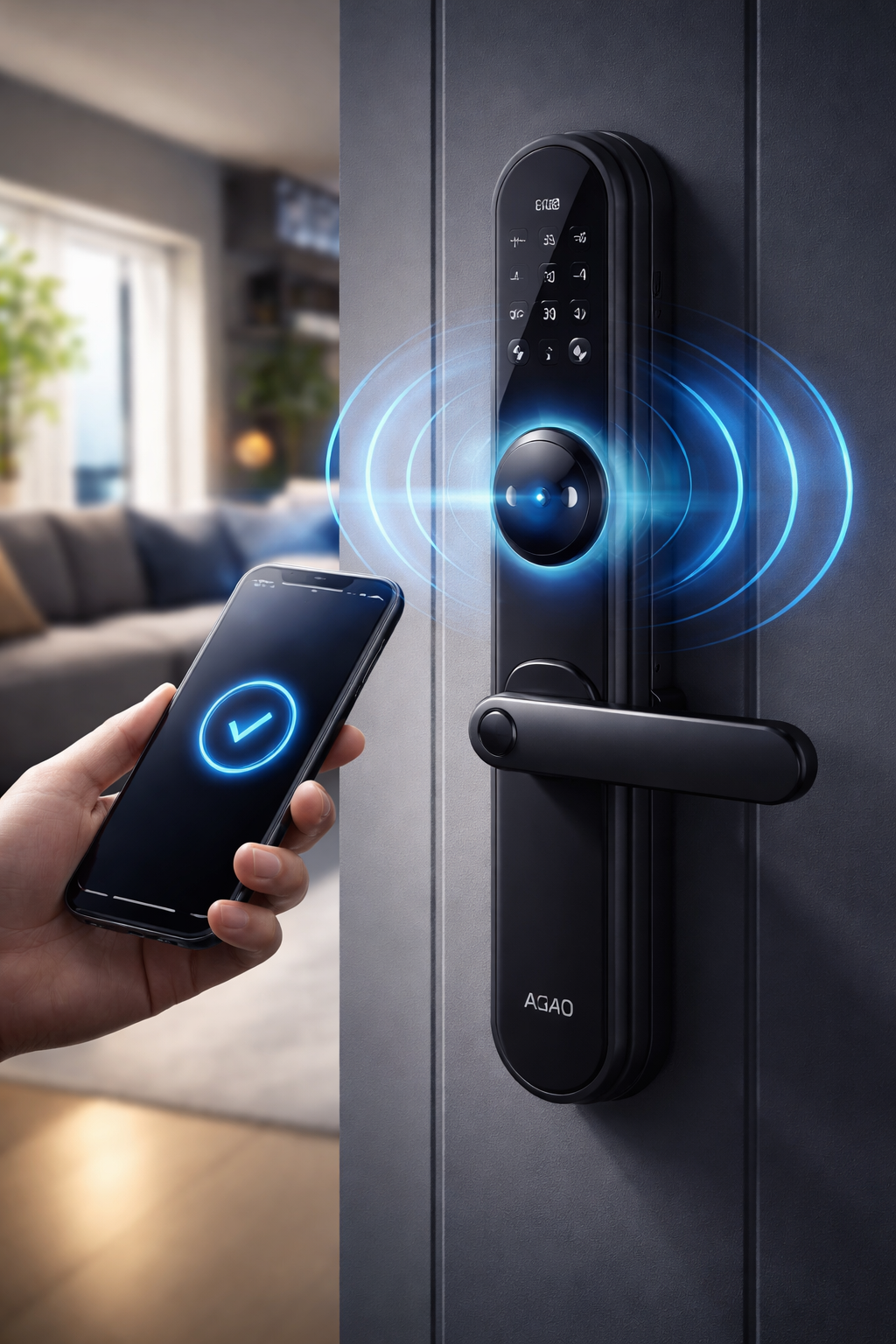
UWB technology operates on short-range, high-bandwidth radio frequencies, allowing for incredibly accurate spatial and directional awareness. Think of it not just as knowing a device is near, but knowing its precise position within centimeters, and even its orientation. When applied to a smart lock, this transforms the experience from a “pull out your phone and tap” routine to a genuinely hands-free, almost magical interaction. As an iPhone owner approaches their door with the U400, the embedded Apple U1 chip authenticates their presence and proximity with unparalleled accuracy, initiating an unlock sequence before they even touch the handle.
This isn’t merely a convenience; it’s a paradigm shift in how we interact with access control. It moves us from active engagement to passive presence, making our physical surroundings intelligently responsive to our being.
The Apple Ecosystem’s Pioneering Stance and Its Double-Edged Sword
Aqara’s U400, leveraging Apple’s U1 chip for its advanced functionality, highlights both the promise and current limitations of this emergent technology. Apple has been a vocal champion of UWB, embedding it across its device ecosystem, from iPhones to Apple Watches and AirTags. This strategic integration has created a powerful, secure, and tightly controlled environment for UWB applications, particularly around spatial computing and digital keys.
On the one hand, this ecosystem approach offers immense benefits:
- Enhanced Security: The precise localization of UWB makes spoofing and relay attacks significantly harder compared to traditional wireless methods. Your phone isn’t just near the door; the lock knows its exact vector and distance, bolstering security.
- Seamless User Experience: For Apple users, the integration is smooth, reliable, and deeply embedded into their existing digital lives, feeling intuitive rather than an add-on.
- Proof of Concept: Apple’s adoption lends significant credibility and accelerates the development of UWB-enabled applications.
On the other hand, it presents a challenge for universal adoption:
- Walled Garden Effect: The reliance on Apple’s U1 chip currently limits the full hands-free experience primarily to iPhone users. While the lock still functions for others, the pinnacle of its UWB capability remains within a specific ecosystem.
- Interoperability Hurdles: For UWB to truly revolutionize the smart home, an open standard and broader adoption across various device manufacturers and operating systems are crucial. This sale makes a UWB device cheaper, but the full societal impact requires wider compatibility.
Long-Term Impact: Beyond the Door, Towards the Truly Intelligent Environment
The true long-term impact of UWB in smart locks extends far beyond the convenience of hands-free entry. This technology is a foundational block for truly intelligent, context-aware environments.
1. The Contextual Home: Anticipating Your Needs
Imagine a home that doesn’t just unlock as you approach, but also adjusts the lighting, climate, and even activates specific personalized smart routines based on who is entering, where they are within the threshold, and even what time of day it is. UWB’s precision can enable a hyper-contextual smart home, where systems anticipate your needs rather than waiting for your command. Lights illuminate your path, music subtly shifts, and even internal doors might unlock as you move from room to room – all based on your precise location and presence.
2. Elevating Digital Security in the Physical Realm
The U400’s UWB capability is a harbinger of next-generation physical security. By creating a highly accurate, short-range, and secure communication channel, UWB can enable multi-factor authentication methods that blend digital credentials with physical presence in unprecedented ways. This could extend to secure package deliveries into smart lockers, precise asset tracking within a corporate campus, or even preventing unauthorized access to sensitive areas by detecting precise location and orientation of approved devices. The era of robust digital security migrating to physical access is upon us.
3. The Foundation for Spatial Computing in Everyday Life
As augmented reality (AR) and spatial computing become more prevalent, UWB will be an indispensable backbone. Your smart lock, detecting your precise approach, could trigger AR overlays on your phone’s screen, displaying pertinent information about your home, messages, or even dynamic wayfinding within your property. The smart lock, in this context, becomes a spatial anchor point, a reference for digital information interacting seamlessly with the physical world.
Conclusion: A Discounted Glimpse into the Future
The Aqara U400’s presence in Amazon’s Big Spring Sale is more than just a fleeting opportunity for a bargain. It’s a critical moment where advanced technology, previously niche or expensive, becomes accessible to a broader audience. It pushes the boundaries of what we expect from our connected homes, moving them from rudimentary remote control to sophisticated, spatially aware environments.
While the “walled garden” aspect is a current reality, the trajectory is clear: UWB is destined to become a ubiquitous standard for precise spatial interaction. Investing in a UWB smart lock now isn’t just about enjoying hands-free convenience; it’s about adopting a piece of infrastructure that will serve as a foundational element for the truly intelligent, secure, and responsive physical world of tomorrow. The future of home access isn’t just “smart” – it’s beautifully, precisely spatial.