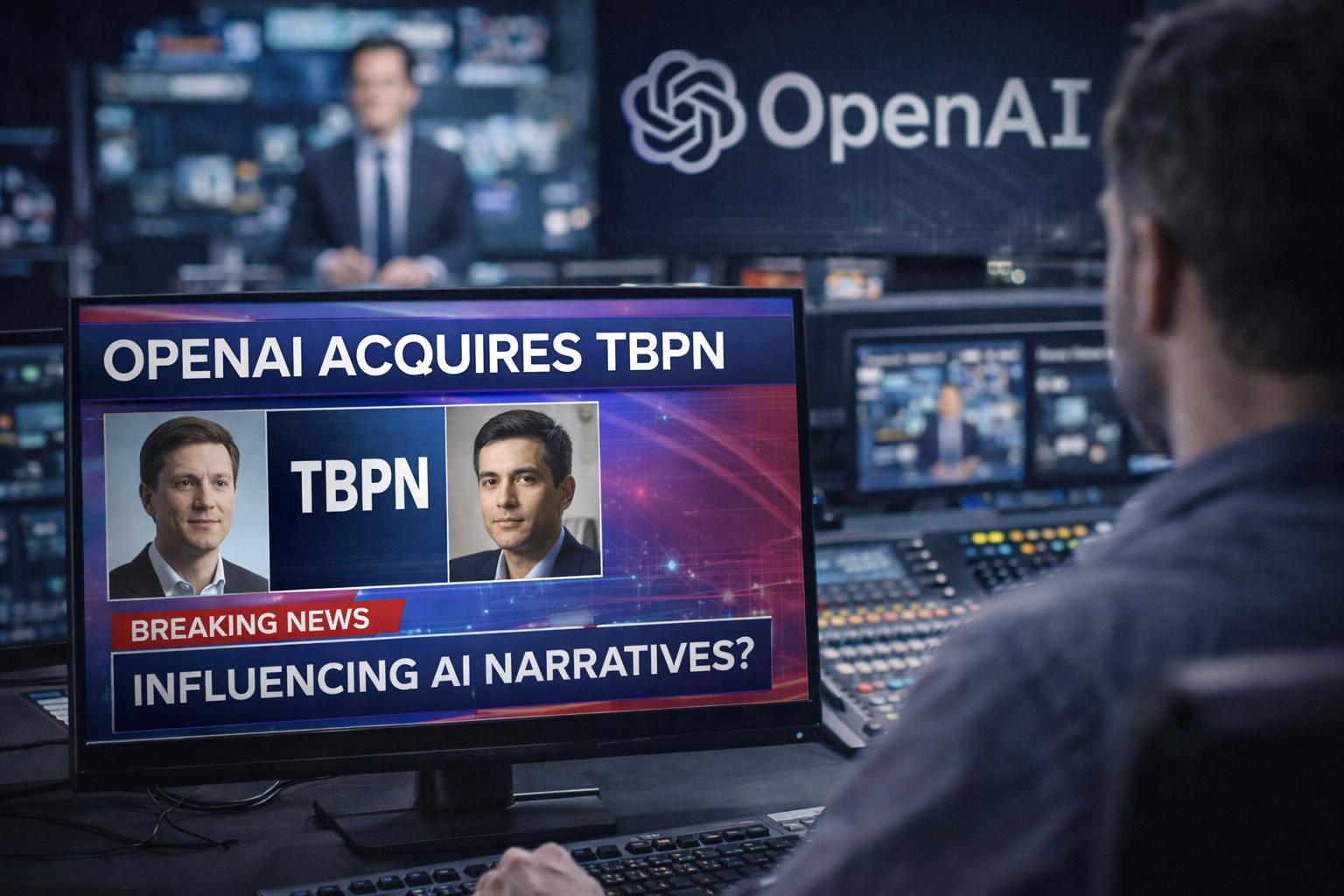
The Algorithmic Echo: OpenAI, TBPN, and the Architecture of Future AI Discourse
Key Takeaways
- This acquisition centralizes the narrative power around AI with a key developer
- The future of 'independent media' may evolve under the strategic umbrella of tech giants
- It mandates critical vigilance over the curation and access to AI-related information
The Algorithmic Echo: OpenAI, TBPN, and the Architecture of Future AI Discourse
In the relentless surge of technological evolution, some announcements ripple further than others, not just shaking the market but subtly recalibrating the very dynamics of progress. OpenAI, a name synonymous with pushing the boundaries of artificial intelligence, has acquired TBPN. On the surface, the stated intent is clear: to “accelerate global conversations around AI and support independent media.” Yet, for those of us observing the intricate dance between innovation and influence, this move by OpenAI is far more than a simple acquisition; it’s a profound strategic play to architect the global discourse surrounding AI, with long-term implications that demand our acute attention.
This isn’t merely about expanding a business empire; it’s about expanding intellectual territory, carving out a significant stake in how the world perceives, discusses, and ultimately governs the most transformative technology of our era. The question isn’t just what TBPN brings to OpenAI, but what OpenAI brings to TBPN, and by extension, to the global conversation itself.
The Strategic Gambit: Beyond the Balance Sheet
OpenAI’s official narrative frames the TBPN acquisition as a philanthropic endeavor, a commitment to “support independent media” and foster “diverse voices.” This is laudable on its face. In an age saturated with misinformation and echo chambers, a dedicated platform to facilitate nuanced, informed discussions on AI sounds like a beacon of hope. However, the inherent paradox must not be overlooked: can true independence be maintained when the supporting entity is a principal player whose innovations are at the heart of the very discourse being facilitated?
The acquisition places OpenAI not just as a developer of AI, but as a significant curator of the public’s understanding of AI. This isn’t necessarily malevolent; it could genuinely stem from a desire to ensure a more informed public. Yet, it consolidates power. By directly owning a platform dedicated to AI conversations, OpenAI gains an unparalleled channel to shape the narrative, highlight preferred perspectives, and potentially mitigate critiques. This isn’t about censorship, but rather about the subtle art of framing – controlling which questions are asked, which experts are amplified, and which directions the conversation takes.
Consider the long-term implications: As AI becomes increasingly embedded in every facet of society, from healthcare to finance to governance, the public’s understanding and acceptance will be paramount. An entity that not only builds the technology but also provides the primary public square for discussing it wields immense influence. This move subtly shifts the landscape of AI policy and public perception from a decentralized, often chaotic, multi-stakeholder debate to a potentially more streamlined, yet centrally influenced, narrative.
Shaping the AI Narrative: A Double-Edged Sword
The aspiration to “accelerate global conversations” is vital. The sheer complexity and rapid pace of AI development often leave policymakers, the public, and even many tech professionals struggling to keep up. A dedicated, well-resourced platform could genuinely elevate the quality of discourse, moving beyond sensationalism to substantive exploration of ethical considerations, societal impacts, and regulatory frameworks. TBPN, under OpenAI’s aegis, has the potential to become a nexus for informed debate, connecting diverse communities from builders and businesses to ethicists and civil society.
However, the “double-edged sword” lies in the potential for subtle bias. Every organization has a perspective, a set of priorities, and a vision for the future. When a dominant AI developer controls a significant channel for public conversation, there’s an inherent risk that the narrative might inadvertently (or even deliberately) align with its strategic interests. Will discussions around AI safety, bias, or the concentration of power be as robustly facilitated if they touch on the acquiring entity’s own practices or products? The critical, often uncomfortable, questions that truly “independent media” is meant to ask could be softened or overshadowed.
This places a heavy onus on OpenAI to implement transparent editorial guidelines, rigorous journalistic ethics, and an unwavering commitment to genuine pluralism of thought within TBPN. The success of this acquisition, in terms of its stated goals, will hinge not on its ability to “accelerate conversations,” but on its capacity to foster diverse, unfettered conversations, even those that challenge the very premises upon which OpenAI operates.
The Future of Discourse: Centralized or Decentralized?
The OpenAI-TBPN acquisition forces us to confront fundamental questions about the future of media, tech policy, and democratic discourse in the age of intelligent machines. Is this the harbinger of a future where foundational tech companies increasingly assimilate media outlets to control their public image and steer public opinion? Or is it a pragmatic solution to the problem of a fragmented, often ill-informed, public sphere struggling to grapple with complex technological shifts?
The long-term impact could swing in either direction. On one hand, it could lead to an unprecedented era of informed public engagement with AI, where complex topics are demystified, and genuine understanding flourishes. On the other, it could contribute to a subtle centralization of narrative power, where the architects of technology also become the architects of its public perception.
This acquisition isn’t just about AI; it’s about the very mechanisms of knowledge dissemination and the exercise of influence in the 21st century. It underscores the urgent need for a robust, truly independent media ecosystem capable of scrutinizing powerful tech entities, and for a tech policy framework that anticipates and addresses the implications of such concentrated power. As ‘The NexusByte’ has always argued, the future isn’t just built; it’s negotiated – and who controls the negotiating table matters immensely.
We must remain optimistically critical: hopeful for the potential of enriched dialogue, yet vigilant against the subtle erosion of independent critique. The algorithmic echo can amplify voices, but we must ensure it amplifies all of them, not just a curated few.